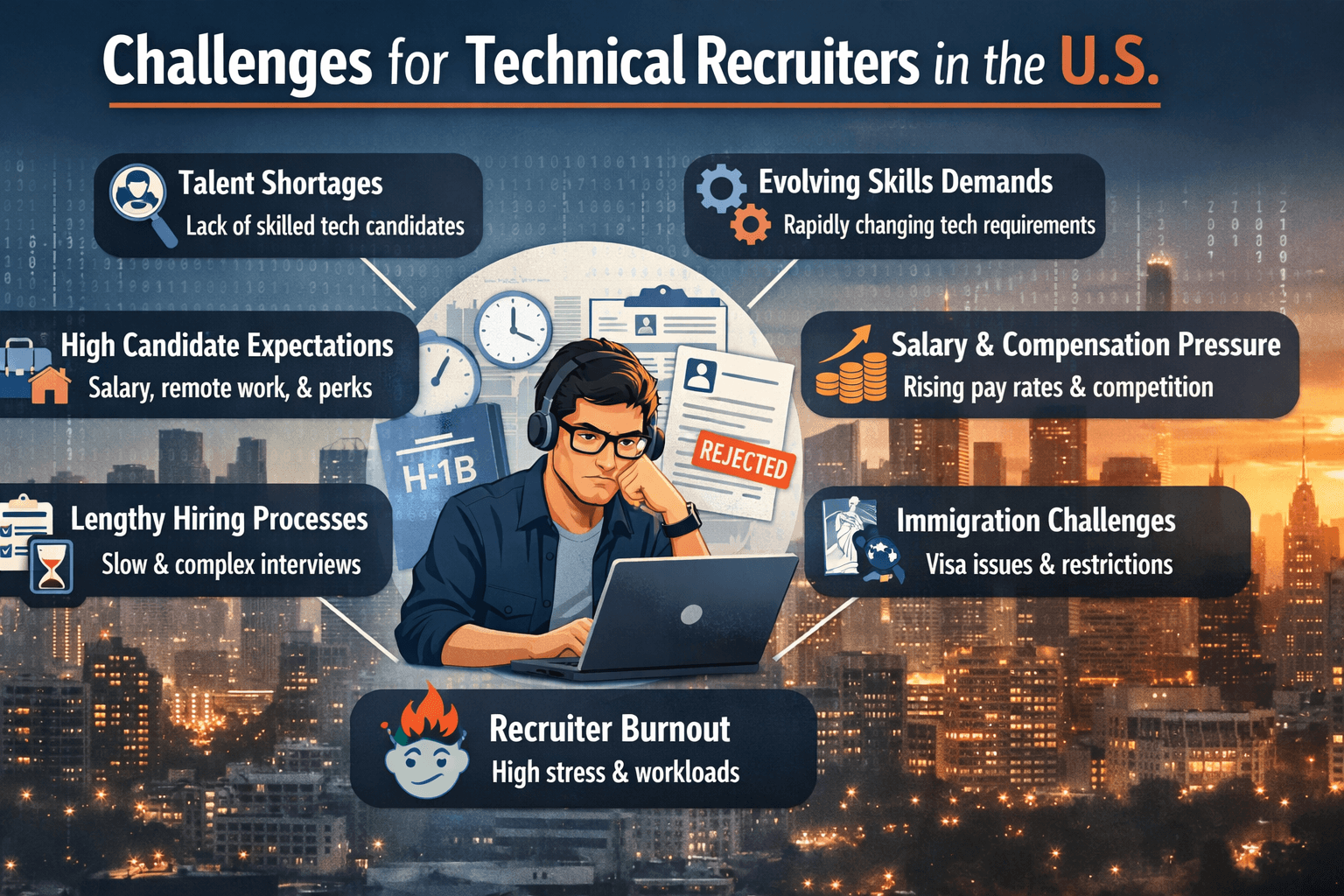
Many Challenges Facing Technical Recruiters in Technical recruiting in the United States has never been simple but in recent years, it has become significantly more complex. Rapid technological change, talent shortages, evolving candidate expectations, and economic uncertainty have reshaped how recruiters source, evaluate, and retain technical professionals. For technical recruiters, success now requires far more than filling open roles; it demands strategic thinking, adaptability, and deep market awareness.
1. Persistent Talent Shortages in Key Technical Roles
One of the most pressing challenges for U.S. technical recruiters is the ongoing shortage of qualified talent. Demand for software engineers, data scientists, cybersecurity specialists, and cloud architects continues to outpace supply. According to data from the Bureau of Labor Statistics, employment in computer and IT occupations is projected to grow faster than the average for all occupations over the next decade.
This imbalance puts recruiters in a highly competitive environment, where multiple companies pursue the same candidates. As a result, time-to-hire increases, hiring costs rise, and recruiters must work harder to differentiate their roles and employers.
2. Rapidly Changing Skill Requirements
Technology evolves faster than most hiring frameworks. Skills that were in demand just a few years ago may already be outdated, while new tools, frameworks, and programming languages emerge constantly. Recruiters are expected to understand complex technical stacks often without being engineers themselves.
This creates a knowledge gap that can lead to mismatched hires or missed talent. Technical recruiters must continuously upskill, collaborate closely with hiring managers, and translate highly technical requirements into clear, candidate-friendly messaging.
3. High Candidate Expectations and Market Power
In many parts of the U.S., top technical talent holds significant negotiating power. Candidates expect competitive salaries, flexible work arrangements, meaningful projects, and strong company culture. Remote and hybrid work options, accelerated by the pandemic, have become a baseline expectation rather than a perk.
Recruiters often face the challenge of aligning these expectations with company budgets, policies, and leadership priorities. When organizations are slow to adapt, recruiters may struggle to close candidates—even after successful interview processes.
4. Salary Inflation and Compensation Pressure
Compensation has become a critical pain point in technical recruiting. Salary benchmarks rise quickly, particularly in tech hubs such as Silicon Valley, Seattle, Austin, and New York. Even companies outside traditional tech centers must compete with remote-friendly employers offering big-tech-level pay.
Recruiters frequently find themselves delivering difficult feedback to hiring managers: market rates have changed, and existing compensation bands may no longer be realistic. Without competitive offers, even strong employer brands can lose top candidates late in the hiring process.
5. Lengthy and Complex Hiring Processes Challenges Facing Technical Recruiters
Another challenge is the hiring process itself. Many U.S. companies still rely on multi-round interviews, take-home assignments, and long decision cycles. In a competitive market, this can be a deal-breaker. Candidates often drop out when processes feel slow, repetitive, or overly demanding.
Technical recruiters are caught in the middle—trying to maintain a positive candidate experience while coordinating multiple stakeholders and navigating internal bureaucracy. Streamlining interviews without sacrificing quality is a constant balancing act.
6. Immigration and Visa Constraints
For companies that rely on global talent, U.S. immigration policies present additional challenges. Visa programs such as H-1B are highly competitive, capped, and subject to regulatory changes. Recruiters must navigate complex legal requirements while managing candidate expectations and timelines.
These constraints limit access to international talent and increase uncertainty, especially for startups and smaller firms without dedicated immigration resources.
7. Burnout and Recruiter Workload
Finally, technical recruiters themselves face burnout. High requisition loads, constant outreach, rejection management, and pressure to deliver results in a tight market can take a toll. When recruiters are stretched too thin, quality suffers—impacting both candidate experience and long-term hiring success.
Organizations that fail to invest in recruiter support, tools, and realistic goals risk losing experienced recruiters, further compounding hiring challenges.
Conclusion
Technical recruiting in the United States is a high-stakes, high-skill function shaped by talent scarcity, rapid technological change, and evolving workforce expectations. Today’s technical recruiters must act as market analysts, relationship builders, and strategic advisors—not just resume screeners.
Companies that recognize these challenges and empower their recruiters with competitive compensation strategies, streamlined processes, and continuous learning opportunities will be best positioned to attract and retain top technical talent in an increasingly competitive U.S. market.
See more Technical News on News Hub hindi





Nice write-up, clear and useful insights with practical points.